
Trusting the Machines: How We Prepare for a Future with Robots at Work and Home

reasonX Team
reasonX Team
Trusting the Machines: How We Prepare for a Future with Robots at Work and Home
reasonX was recently featured in Asharq News discussing an important question: How can we build trust in the robots working alongside us at home and at work? Originally published in Arabic, this English version of the article brings the same real-world examples and forward-looking insights to our global audience.
The robotics revolution is no longer theoretical. It's reshaping how we work, from hospitals to warehouses and disaster zones. As intelligent machines take on greater roles alongside humans in these high-stakes environments, a new question comes into focus: How can we design robots that earn and enhance human trust?
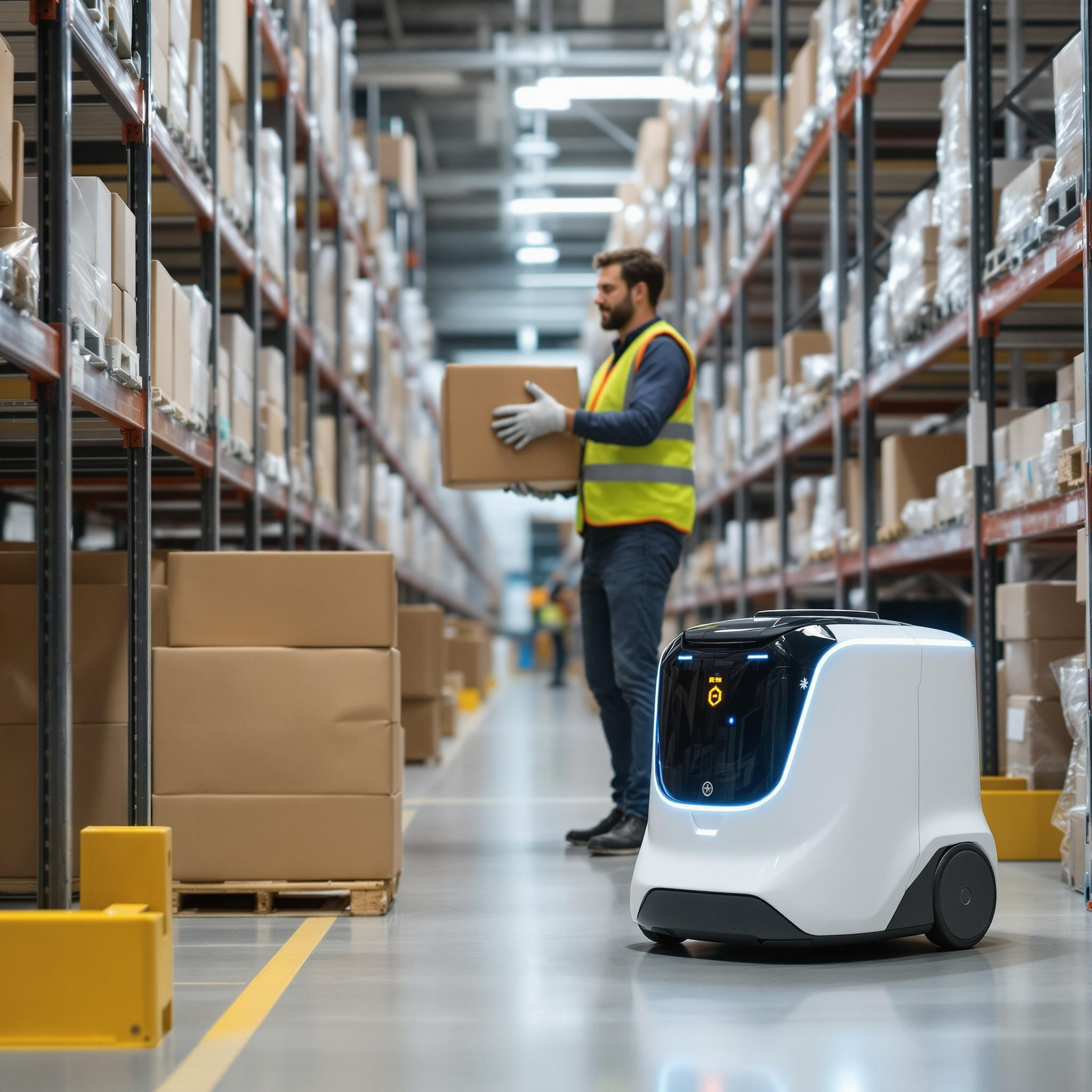
Across the world, collaborative robots (commonly known as COBOTs) are being integrated into everyday settings, from medical facilities and logistics hubs to even our homes. These machines are designed to work with humans, not just near them. In warehouses, workers are using wearable exosuits that make lifting safer and easier, helping prevent injuries. At Amazon, mobile robots move heavy carts through busy work areas without getting in the way of people. And in China, firefighting robots are being used to enter dangerous areas first, keeping human crews out of harm's way.
These are not sci-fi prototypes. They are commercial technologies in active deployment. The economic benefits, from increased efficiency to better support for human workers, are becoming more visible. Yet as these machines become part of our daily lives, building the social foundations for trust and acceptance remains an ongoing journey.
Safety vs. Speed: Bridging Innovation and Trust
A growing challenge in robotics today is the mismatch between exponential innovation and linear regulation. Unlike industrial robots that operate behind barriers, robots with collaborative applications navigate dynamic, human-centric environments. That means safety, security, reliability, and even user perception must be considered together.
Existing regulatory frameworks vary widely. The European Union is furthest along with its AI Act, a landmark piece of legislation that explicitly classifies AI and robotic systems by risk category. Robots designed for physical interaction with humans fall into high-risk categories, requiring conformity assessments and post-market surveillance.
In the United States, regulatory oversight of robotics remains decentralized. While the National Institute of Standards and Technology (NIST) has issued important guidance, responsibilities are distributed across agencies such as OSHA, the FDA (for medical applications), and the FAA (for drones). In the absence of a unified framework, private-sector developers often self-certify based on partial adherence to standards like ISO 13482 or IEC 61508.
Building Trust in Practice
Public trust in robots won't be earned by promises of innovation alone. It must be built on verifiable, domain-specific safety evidence.
For example, a surgical robot used in orthopedics must demonstrate precise motion constraints, failure containment protocols, and resilience to cyberattack – very different from a sidewalk delivery robot navigating a college campus. The trust requirements for each vary greatly.
International efforts to define trustworthiness metrics are now underway. Groups like the IEEE Global Initiative on Ethics of Autonomous and Intelligent Systems and ISO/TC 299 (Robotics) are proposing frameworks that include:
- Safety validation under human unpredictability
- Privacy protection for sensors and voice recognition systems
- Cybersecurity robustness for connected robots
- Interpretability of robotic decision-making
But these guidelines remain largely voluntary, and few have enforcement mechanisms. Transparency in design, testing, and real-world performance data is still rare.
"Trust isn't just a warm feeling. It's built on concrete foundations of safety, security, privacy, and reliability," says Umair Siddique, robotics safety expert and co-founder of reasonX Labs. "Especially for robots designed to work alongside us, earning that trust must be a design goal—not an afterthought."
From Black Boxes to Transparent Systems
One of the most promising approaches now being trialed by several research labs and private companies is the development of "trustworthiness cases." These are structured, evidence-based documents—akin to safety cases in the aerospace industry—that lay out the assumptions, safeguards, failure modes, and mitigation strategies of a robotic system. Think of it as a legal argument for why a robot should be trusted.
NASA and the UK Civil Aviation Authority have long used this approach for mission-critical systems, and there is growing momentum to apply it in robotics. The German Research Center for Artificial Intelligence (DFKI), for instance, has published detailed assurance cases for autonomous underwater vehicles. In California, pilot programs are exploring similar strategies for delivery robots and robotic arms in eldercare. In terms of standardization, UL 4600 stands out as it provides a comprehensive framework for building and assessing safety cases for autonomous systems.
This shift toward formal transparency—before mass adoption—could bridge the trust gap.
The Path Ahead: Slow Down to Speed Up
As robotics take on critical roles in healthcare, logistics, and public safety, it's essential to pair deployment with robust accountability mechanisms.
The 2016 incident where a Knightscope security robot at Stanford Shopping Center knocked down and ran over a 16-month-old toddler, not due to malicious programming but simple sensor blindness, remains a cautionary tale. And the 2025 incident where a Unitree H1 humanoid robot violently flailed its arms and legs during testing, nearly injuring two workers after its sensors misinterpreted being tethered as falling, illustrates how safety failures can emerge even in controlled environments.
What's needed now is not a pause on robotics, but a parallel investment in governance: measurable standards, independent audits, and transparent communication.
Final Thought
Robots will transform our daily lives, but transformation without trust is instability. As a society, we must insist on systems that are not just clever—but accountable, explainable, and safe. Only then can we unlock the full promise of this technological wave, without being swept away by its unintended consequences.
At reasonX, we're committed to building the infrastructure that enables this trust. Through rigorous safety assurance methodologies and transparent development practices, we're helping ensure that the robots of tomorrow earn their place alongside us—not through force of innovation alone, but through demonstrated reliability and respect for human values.
Ready to learn more about building trustworthy robotic systems? Let's discuss how reasonX can help your organization navigate the complexities of safe robotics deployment.